
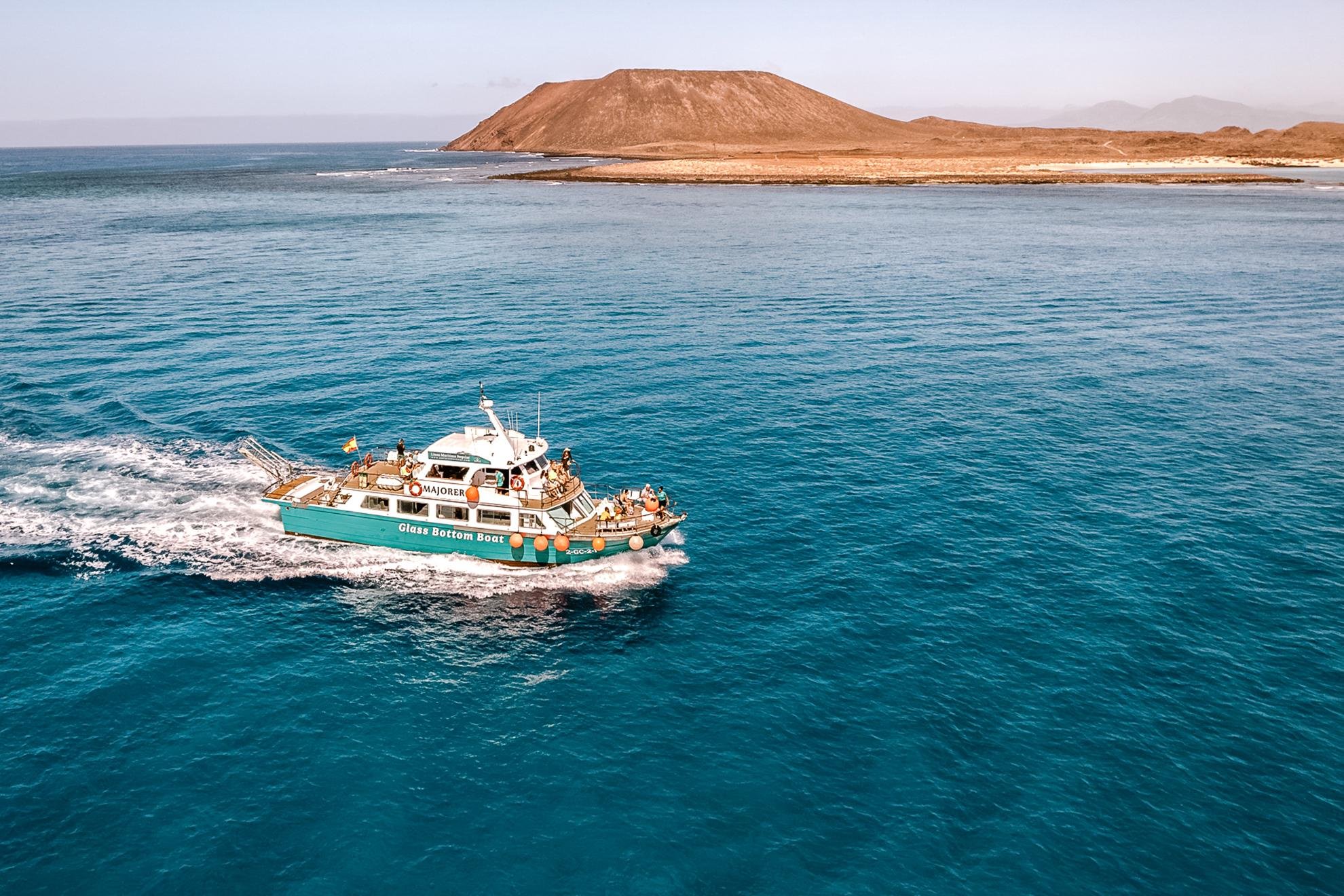
20 min
Lobos Island Return Ferry from Corralejo
Cross to a volcanic nature reserve with pristine beaches and walking trails at your leisure
Reserve
Hand-picked by our editors — the 5 highest-rated ferry and marine excursions from 23 operators reviewed.
Verified partners for every tour, free cancellation where available, and instant confirmation on every booking.
20 min
Cross to a volcanic nature reserve with pristine beaches and walking trails at your leisure
Reserve
24 hr
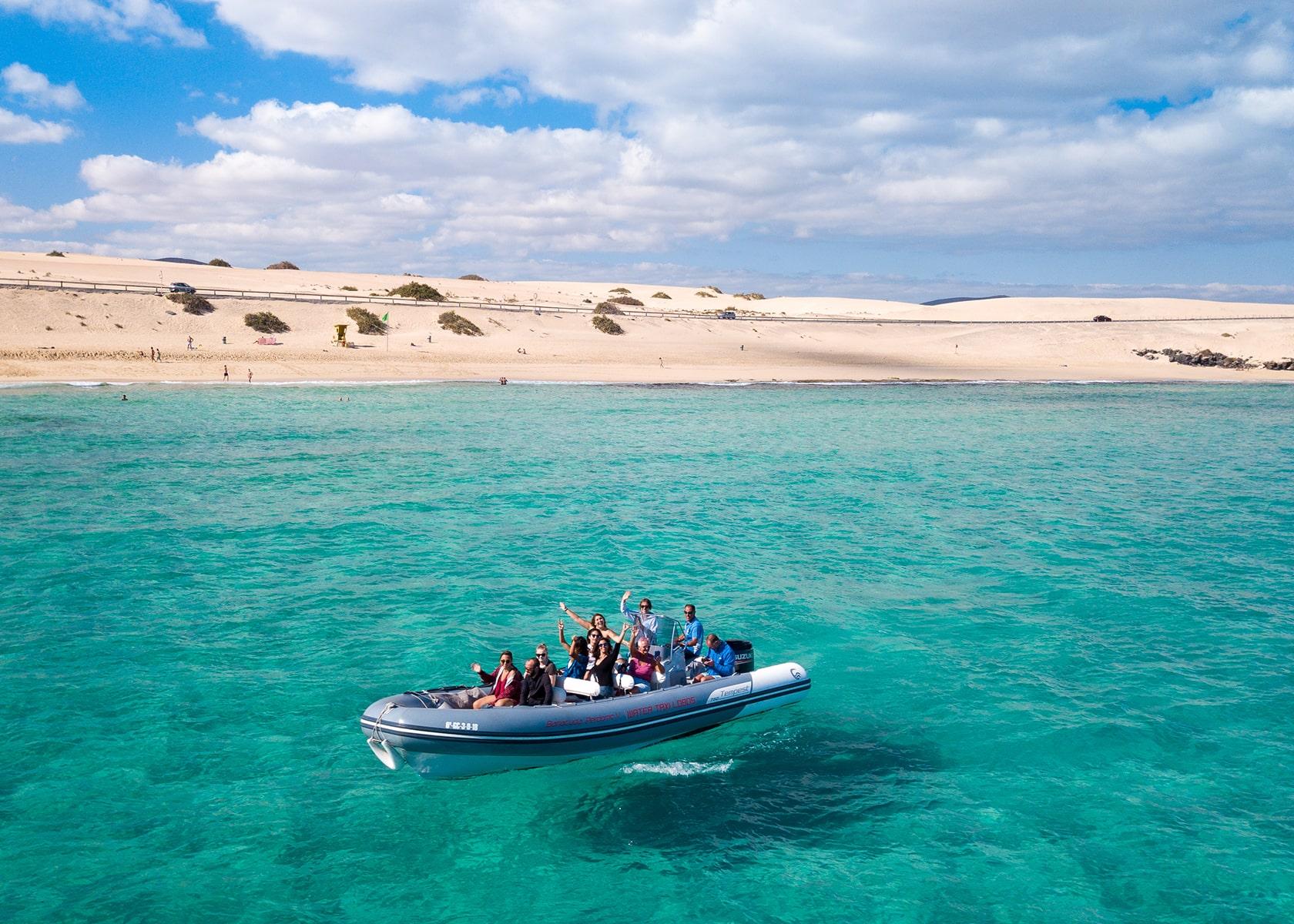
Cross to a protected island paradise with volcano views, secluded beaches, and crystal lagoons
Reserve
15 min
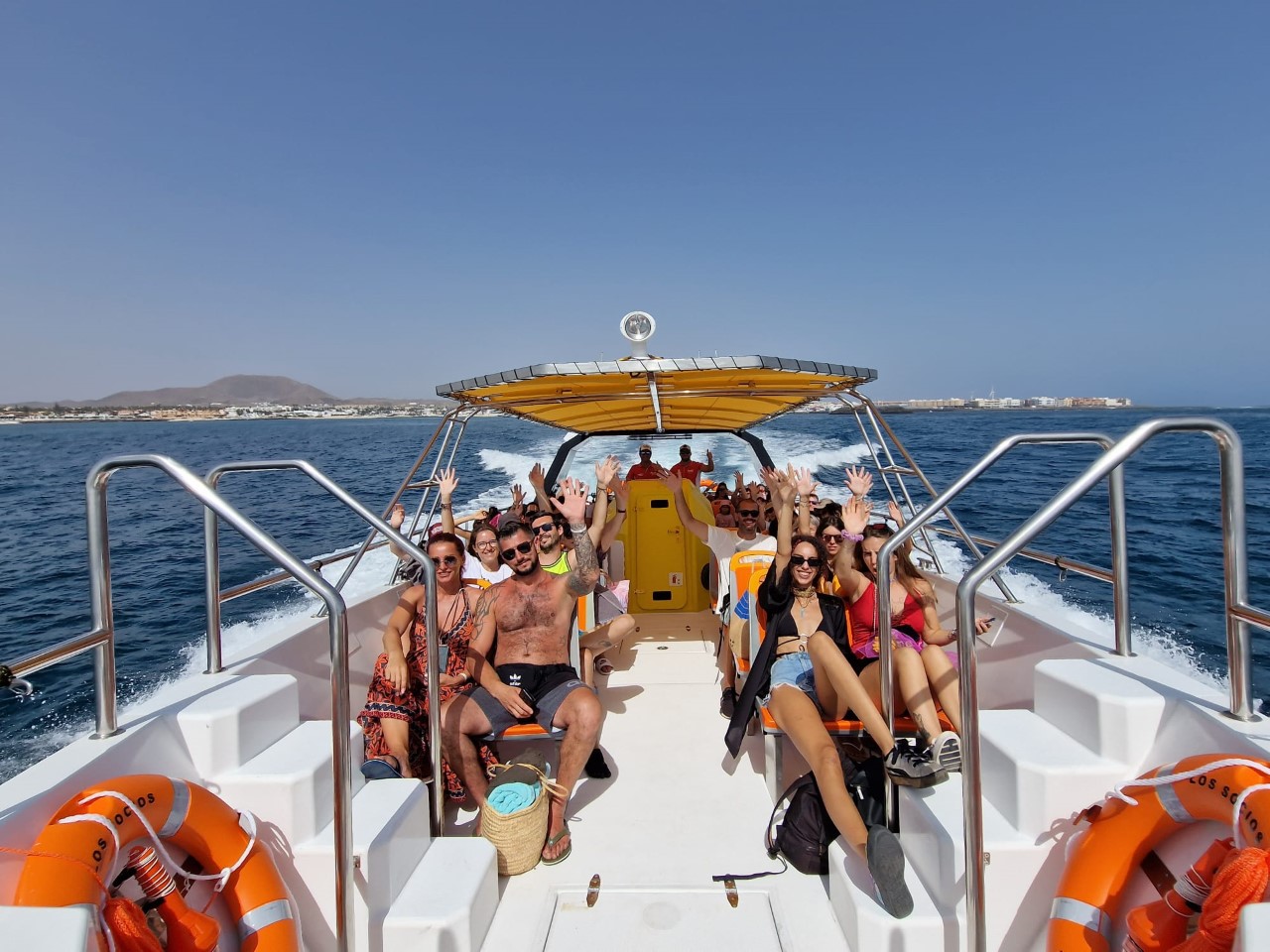
Fast 12-minute speedboat crossing to pristine Lobos Island with flexible return times throughout the day
ReservePrices from verified partners. Availability updates in real time at checkout. Free cancellation policies apply where shown.
The landmarks, rooms, and views travelers on this tour remember — all visible on a single visit.
View marine species directly beneath the vessel floor through reinforced windows
Observe diverse marine life in the protected waters surrounding Fuerteventura
Experience the local aquatic habitat during the designated stop
The primary transit hub for all departures in the northern region
Look for local dolphin and whale populations in the Atlantic
Glass bottom boat corralejo tours offer superior direct visibility of marine life, while catamarans provide higher speeds for reaching deeper offshore feeding grounds. Travelers seeking intimate aquatic observation prefer the former, whereas those prioritizing open-ocean exploration find the latter more effective for tracking pods.
| Feature | Top pick Glass Bottom Boat | Catamaran Excursions |
|---|---|---|
Primary Purpose |
Marine observation | Whale and dolphin searching |
Underwater Viewing |
Direct floor windows | None |
Typical Speed |
Slow and steady | High speed |
Wildlife Interaction Range |
Coastal focus | Offshore deep water |
Boat Stability |
Moderate | High |
Standard Group Size |
10–20 passengers | 20–50 passengers |
| See tickets → |
Verdict: Securing glass bottom boat corralejo tickets is ideal for families wanting close-up marine views, while catamaran trips are better for enthusiasts focused on tracking cetaceans across open Atlantic waters.
Choose your ticket, select your date, and reserve in under two minutes. Secure checkout handled by our verified partner.
Instant confirmation by email, with a mobile voucher you can save offline. No printing, no queuing at a collection desk.
Arrive at the entrance, show your voucher on your phone, and walk in. Most tickets include priority or skip-the-line access.
Practical details for your visit straight from our verified partners — hours, access, rules, and how to get there.
35660 Corralejo, Fuerteventura, Spain
Look for signage near the main pier
Parking is available near the Port of Corralejo for short and long-term visits
Local lines connect nearby towns to the main bus station in Corralejo
Casual beachwear is appropriate for all glass bottom boat Corralejo excursions. Wearing a light jacket is advised as sea breezes can be cool even on sunny days.
Small personal bags are permitted on the glass bottom boat Corralejo tours. Large suitcases or bulky equipment are discouraged due to limited storage space on the vessel.
Photography is encouraged during your glass bottom boat Corralejo experience. Ensure cameras are protected from saltwater spray while capturing marine life.
The vessel used for the glass bottom boat Corralejo tour has limited accessibility. Passengers must be able to navigate a few steps to board the boat from the dock.
Mobile phones are permitted for capturing photos and videos. Use caution to avoid dropping devices into the water during the trip.
Children are welcome on the glass bottom boat Corralejo voyages. Supervision is required at all times while moving around the deck.
Light snacks and water are recommended for the glass bottom boat Corralejo journey. Consumption of alcohol is prohibited on board for safety reasons.
Pets are generally not allowed on board the glass bottom boat Corralejo vessels. Service animals may be accommodated with prior notification.
The 28 EUR entrance fee covers the mini-cruise and snorkeling activity. Please verify your departure time at the Port of Corralejo before arrival.
35660 Corralejo, Fuerteventura, Spain
Look for signage near the main pier
Get directionsBest time to go, insider tips, nearby landmarks, and the cancellation fine print — flip through to skim what matters to you.
How crowds, weather, and events shift across the year.
Mild temperatures and clear waters make this an ideal season for Corralejo boat trips.
High visibility for underwater viewing though peak tourist numbers arrive.
Calm sea conditions often occur in September and October, perfect for whale spotting.
Water temperatures remain relatively stable but boat schedules may be weather dependent.
Small details that turn a good visit into a great one.
Secure your glass bottom boat Corralejo tickets online during the busy summer months.
Monitor sea reports as excursions depend heavily on wind conditions.
The best arrival window is 09:00–11:00 for the calmest sea visibility.
The deck provides limited cover so bring your own hat and sunglasses.
Sun intensity is high even with a sea breeze while out on the water.
Non-bookable sights within a short walk — free to visit, easy to pair.
A protected nature reserve featuring volcanic landscapes and pristine beaches.
Extensive sandy coastline known for dunes and surfing conditions.
Traditional area with local restaurants and historical architecture.
Family attraction featuring slides and various pools for all ages.
Flexible, no hidden fees.
Full refunds are typically issued if the glass bottom boat Corralejo trip is canceled due to adverse weather conditions. Please request any necessary changes well in advance of the scheduled departure time.
Hand-picked options within walking distance — pick a district for vibe, or a specific hotel for convenience.
Centrally located hotel overlooking the ocean
Resort style accommodation near the beach
High-end resort offering sea views
Corralejo's harbour has served as the closest crossing point to Lobos Island since the fishing village expanded in the early twentieth century, when seasonal trade between Fuerteventura and Lanzarote required protected anchorage along the northern coast. The natural channel separating Corralejo from Lobos measures just two kilometres at its narrowest point, and the steady Atlantic swell that defines the Canarian archipelago calms noticeably in the strait, creating conditions ideal for glass-bottomed vessel operation and shallow-draft ferries. By the mid-1990s, the harbour had transformed from a working port into a dual-use facility accommodating both commercial fishing fleets and the growing number of marine tour operators seeking access to the Lobos Nature Reserve, which was formally protected in 1982 and has since remained one of the smallest inhabited islets in the Canaries. The seabed between Corralejo and Lobos consists primarily of volcanic basalt interspersed with patches of Neptune grass meadow, and visibility in the channel frequently exceeds fifteen metres during morning hours when wind has not yet stirred sediment from the shallow shelf. Glass bottom boat Corralejo departures concentrate in the window between nine and eleven in the morning, when tidal exchange brings nutrient-rich water through the strait and angelfish, parrotfish, and damselfish congregate near the volcanic outcrops. The marine reserve regulations prohibit anchoring within designated zones, so operators rely on drift-snorkeling techniques and live commentary to guide passengers through the underwater landscape without disturbing the substrate. Lobos itself supports a permanent population of fewer than ten residents, most of whom maintain the lighthouse and visitor infrastructure, and day-trip limits enforced by the Cabildo de Fuerteventura cap the number of simultaneous visitors at two hundred to preserve the islet's fragile dune systems and nesting seabird colonies. Catamaran services from the Corralejo Port now include glass viewing panels in their hulls, allowing passengers to observe the benthic zone without entering the water, and several operators have introduced hybrid itineraries that combine ferry transit with onboard catering and dedicated snorkeling stops along the western shore of Lobos. The paella cruises, which emerged as a distinct product category in the early 2010s, prepare the rice dish using propane galley equipment while the vessel is underway, and passengers disembark at Playa de la Concha for swimming before the return crossing. Speedboat transfers, introduced more recently to serve hikers and photographers unwilling to wait for scheduled ferry departures, complete the Corralejo-Lobos crossing in under ten minutes and operate on a flexible timetable throughout the daylight hours. The harbour's eastern breakwater, extended in 2003 to accommodate larger vessels, now shelters a berthing capacity of thirty-two commercial craft, and morning queues during summer months frequently require advance reservation to secure a departure slot within the optimal visibility window.
"Visibility in the channel frequently exceeds fifteen metres during morning hours when wind has not yet stirred sediment from the shallow shelf."
A step-by-step walkthrough of the visit — what you'll see, how long each stage takes, and the details that matter.
You arrive at Corralejo Port before the morning ferry rush, and the harbour smells of salt and diesel as crew members hose down the decks of catamarans moored along the eastern pier. Boarding begins promptly at nine, and you step aboard a twin-hulled vessel with transparent viewing panels set into the floor between the passenger benches. The engine note rises as the catamaran clears the breakwater, and within minutes the shallow seabed comes into focus beneath the glass—dark volcanic rock pitted with crevices where grouper and moray eel shelter from the current. Midway across the strait, the crew slows the vessel and you peer through the floor panels as a school of salema porgy drifts past, their silver flanks catching the sunlight that penetrates the clear water. The guide points out patches of Neptune grass swaying in the tidal flow, and you spot a stingray half-buried in the sand near a basalt outcrop. Twenty minutes after departure, the catamaran approaches Lobos and you disembark onto a wooden jetty that creaks underfoot, the islet's lighthouse visible on the ridge above the dunes. The snorkeling stop anchors you in waist-deep water along Playa de la Concha, where the seabed slopes gently and damselfish dart between the rocks. You surface and float on your back, the volcanic cone of La Oliva rising across the strait, and the smell of paella drifts from the catamaran's galley as the crew prepares lunch for the return crossing.
The service operates Monday through Sunday from 09:00–18:00.
All boats depart from the Port of Corralejo, 35660 Corralejo, Fuerteventura, Spain.
The entrance fee is 28 EUR per person for the trip.
The best arrival window is 09:00–11:00 as calmer morning conditions improve visibility.
Light snacks are permitted, but avoid bringing large meals or alcohol.
Yes, children are welcome on the glass bottom boat Corralejo trip.
If a trip is canceled, you will receive a full refund of your 28 EUR fee.
The vessel has steps and is not fully wheelchair accessible.
Yes, booking glass bottom boat Corralejo tickets online is recommended.
Each tour includes a mini-cruise and snorkeling experience, typically lasting several hours.